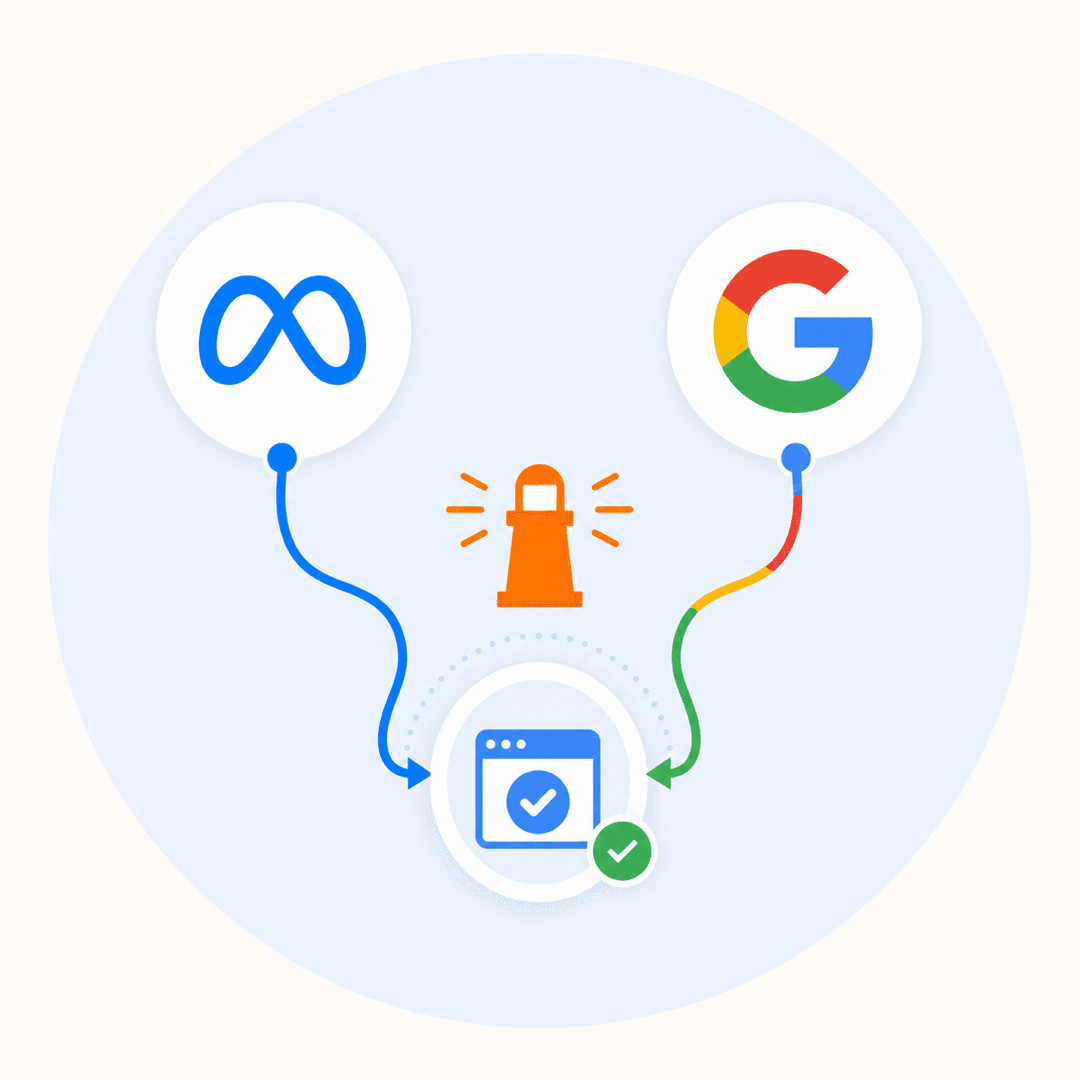
Most businesses run paid campaigns on more than one platform, which means Meta Pixel, GA4, and Google Ads all need accurate conversion data from the same website. Set up piecemeal, over time, by different people, this usually turns into a tangle of overlapping tags where nobody is sure what fires when. Set up deliberately, it is a clean system where each platform gets exactly what it needs. Here is how to approach the second version.
Start with a single source of truth for events
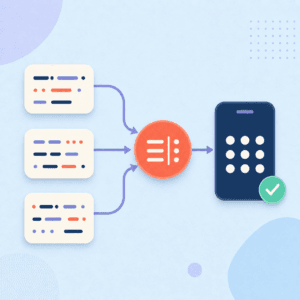
The foundation is defining your key events once, clearly, before you wire up any platform. Decide what actions matter, a lead submission, a booking, a purchase, and treat those definitions as canonical. Every platform’s conversion should map back to these shared event definitions rather than each platform having its own separately invented triggers.
This is what prevents the classic mess where Meta counts a conversion on one trigger, GA4 on a slightly different one, and Google Ads on a third, leaving you unable to reconcile three numbers that should describe the same thing. One event definition, mapped to all three platforms, keeps them consistent.
Use a tag manager as the control layer
Managing three platforms’ tags directly in your site code is how setups rot. A tag manager gives you one place to define triggers, fire the right tags for each platform on each event, and change things without touching site code. It becomes the control layer where your canonical events translate into each platform’s conversion.
The discipline that matters here is one trigger per event, feeding all the platforms that care about that event. When the definitions live in one place, you can audit the whole system at a glance instead of hunting through scattered snippets.
Respect each platform’s model
The platforms do not track identically, and pretending they do causes problems. Meta leans on the Pixel plus server-side signals and its own attribution windows. GA4 is event-based and models conversions its own way. Google Ads has its own conversion actions and, critically, its primary and secondary distinction that controls bidding. A good setup feeds each platform data in the shape it expects while keeping the underlying events consistent.
Expect the numbers across platforms to differ. They use different attribution windows and models, so three platforms reporting the same event will rarely show identical totals. That is normal. The goal is not identical numbers, it is that each platform is accurately counting the real events using its own rules.
Verify before you trust
Before relying on any of it, test. Trigger each key event and confirm every platform records it once, no more and no less. Check for double-fires, missed events, and tags firing on the wrong pages. A tracking setup that has not been verified end to end is a tracking setup you are guessing about, and guesses are expensive when they drive ad spend.
A clean multi-platform tracking setup is the difference between confident decisions and educated guessing. Growth Wizard builds unified tracking across Meta, GA4, and Google Ads from a single source of truth, so every platform gets accurate data and you can actually trust your reporting.