Your growth isn’t slow because of bad ads. It’s slow because you’re running on spreadsheet duct tape and prayer.
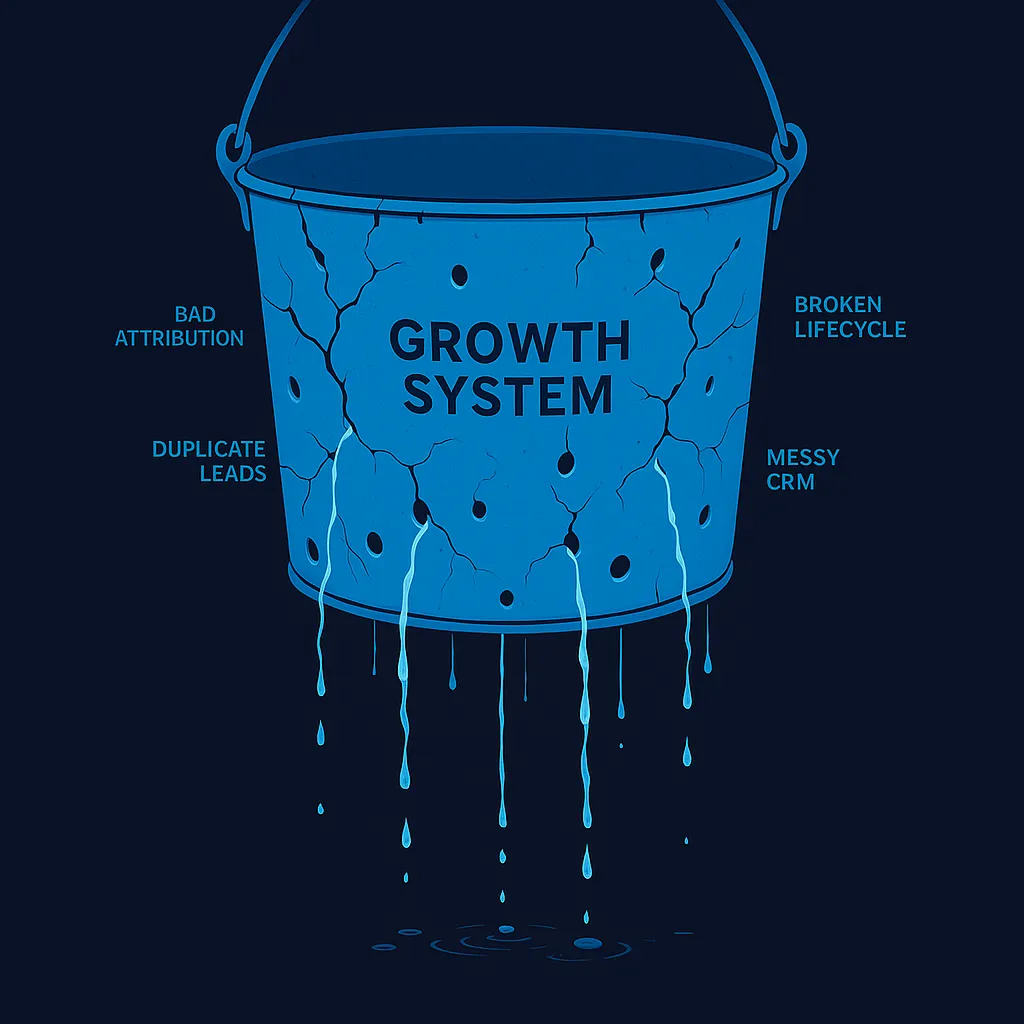
The Bucket With 47 Holes
Here’s what “growth infrastructure” looks like at most companies:
- Lifecycle stages that mean nothing
- Lead statuses that contradict each other
- Attribution held together by Excel formulas
- A CRM full of duplicates and “test” leads from 2019
- Dashboards that show different numbers for the same metric
This isn’t a growth engine. It’s a money fire with good intentions.
What Growth Infrastructure Actually Is
Forget the buzzwords. Growth infrastructure is the operating system under your entire revenue engine.
The core components:
- Data architecture that doesn’t lie
- Lifecycle stages that match reality
- Attribution you can actually trust
- Automations that don’t fight each other
- Feedback loops that make the system smarter
When this breaks, everything breaks. CAC explodes. Sales blames marketing. Marketing blames sales. Everyone moves slower because nobody trusts the data.
When this works, magic happens. Leads flow clean. Algorithms learn faster. Teams move with confidence.
Why Clean Data Powers Smart Ads
Good data isn’t just for reporting. It’s what fuels your paid acquisition engines.
Platforms like Meta and Google learn from the signals you send them. If your CRM is full of bad lifecycle stages, incomplete fields, duplicate contacts, or mislabeled conversions, the algorithms optimize toward the wrong people.
Clean data becomes clean signals. Clean signals become cheaper CPMs, stronger lookalikes, better quality inbound, and more consistent conversion paths. When your data architecture is tight, every ad dollar works harder because the platforms finally understand who your best customers actually are.
Growth slows when your paid channels are guessing. Growth compounds when they’re learning.
The Audit That Hurts
Every rebuild starts with one painful question: Where is our data lying to us?
The usual suspects:
- “MQLs” that haven’t opened an email in months
- “New” leads already in meetings
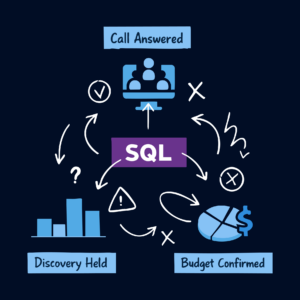
- “SQLs” without a single call logged
- Pipeline stages nobody can define
The problem isn’t missing features. It’s that nobody designed how the system should behave. Just kept adding automations until the logic collapsed.
Fixing Lifecycle Stages (The Right Way)
Your stages are probably based on lists, not behavior. That’s why they’re useless.
The fix:
- Define stages by actions, not assumptions
- Build behavior triggers, not list uploads
- Create exit conditions, not just entry rules
- Align lifecycle stages with actual pipeline movement
Now every lead is exactly where it should be. No guessing.
Data Architecture: The Unsexy Foundation
Nobody wants to talk about data governance. But it controls everything.
What actually matters:
- One owner per field
- One source of truth per metric
- Clear rules for conflicts
- Regular hygiene schedules
Without this, your reporting is fiction. And fictional data creates fictional growth.
Attribution That Actually Works
Attribution isn’t about proving marketing’s value. It’s about knowing what actually drives revenue.
Simple rules:
- Every channel gets credit for its role
- Definitions never change mid-campaign
- First-touch, last-touch, and multi-touch all tracked
- Revenue tied back to source
Once attribution stabilizes, you get directional truth. And directional truth is how you scale.
Automations Without the Chaos
Most CRMs are automation graveyards. Workflows fighting workflows in an endless loop.
The modular approach:
- One automation = one job
- Stage setting ≠ field updates ≠ notifications
- Clear triggers and dependencies
- Documentation that actually exists
When each automation has a single purpose, the system scales without breaking.
Building a Self-Improving Machine
Growth infrastructure isn’t a project. It’s a system that gets smarter with use.
- More volume reveals patterns
- Patterns improve rules
- Better rules increase conversion
- Higher conversion lowers CAC
This is how real growth compounds. Not through hacks. Through systems.
TL;DR
Your growth is only as good as the infrastructure beneath it. Most companies are running on broken foundations and wondering why scaling hurts.
Build the machine right:
- Audit honestly
- Fix lifecycle stages
- Clean your data
- Trust your attribution
- Automate intelligently
The companies that win in 2025 won’t be the ones with the best ads. They’ll be the ones with the best systems.
Stop hoping for growth. Start engineering it.