Why “Just Sync HubSpot to Meta” Is Terrible Advice
“Just sync HubSpot to Meta” has become the default advice for sending offline conversions back to Facebook—and it’s some of the most damaging guidance in modern paid media. It promises simplicity and speed, but quietly trades away control, accuracy, and long-term performance. What looks like a clean, best-practice integration on the surface is often a brittle abstraction underneath, one that lags behind Meta’s evolving requirements and obscures the very data the algorithm needs to learn correctly. The result isn’t immediate failure, but a slow erosion of signal quality that makes optimization harder, spend less efficient, and scaling far riskier than it needs to be.
1. Facebook’s documentation is unclear and frequently changing.
Meta’s conversion and attribution documentation is not a fixed source of truth—it is a moving target. Event requirements, deduplication logic, attribution settings, and recommended payload structures change regularly, often without clean versioning or explicit deprecation notices. What was considered correct implementation months ago may already be misaligned with how Meta’s systems interpret data today.
When teams rely on a third-party integration, they implicitly trust that tool to correctly interpret evolving documentation. That trust is often misplaced. By the time changes are understood, implemented, and released, the platform’s expectations may have already shifted again. The result is a growing gap between how events should be sent and how they actually are—one that rarely surfaces as an error but steadily degrades optimization quality.
2. HubSpot is always behind Meta’s evolving best practices.
Even when Meta introduces clearer guidance or new features, HubSpot does not update its integration in real time. Product updates require engineering cycles, internal prioritization, and backwards-compatibility considerations, all of which introduce delay. During that lag, advertisers are running on an integration that technically “works” but no longer reflects how Meta expects to receive and process conversion data.
This delay matters because Meta’s optimization engine is extremely sensitive to signal quality. Small discrepancies—delayed events, incomplete parameters, or outdated deduplication logic—can materially impact learning. Since conversions still appear in dashboards, these issues often go unnoticed. Performance doesn’t collapse; it softens. Teams then chase creative, audiences, or bids while the real problem lives quietly in the data layer.
3. HubSpot forces you into static, standard lifecycle stages.
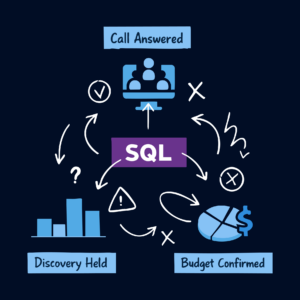
HubSpot’s lifecycle stages were designed for CRM reporting, not for paid media optimization. When syncing events to Meta, you are limited to a predefined set of static stages that fail to capture the nuance of real-world funnels. Sales-qualified leads, held appointments, meaningful conversations, and genuine buying intent all get flattened into broad categories.
As a result, Meta receives blunt and delayed signals instead of precise, outcome-driven events. The algorithm optimizes toward lifecycle transitions that may include large volumes of low-quality or stalled leads, diluting its ability to identify what actually correlates with revenue. Over time, this weakens audience modeling, increases wasted spend, and makes scaling increasingly inefficient.
4. HubSpot hides the Facebook Lead ID, limiting extensibility.
The Facebook Lead ID is a critical identifier for proper event matching and deduplication, especially in systems that combine client-side tracking, server-side events, and CRM data. HubSpot does not make this identifier easily accessible, effectively walling it off behind higher-tier plans and internal abstractions.
Without direct access to the Facebook Lead ID, building complementary systems becomes difficult and fragile. Teams cannot reliably validate events, reconcile duplicates, or extend tracking logic beyond HubSpot’s default behavior. What should be a transparent, auditable pipeline turns into a black box. This restriction doesn’t just limit flexibility—it prevents teams from evolving their tracking architecture as Meta’s requirements and their own business complexity grow.
The real problem is loss of control.
“Just syncing HubSpot to Meta” outsources one of the most critical components of paid media performance: the integrity of your conversion signals. Convenience replaces ownership, and abstraction replaces understanding. For teams serious about scaling, that tradeoff is rarely worth it. Clean, explicit, and adaptable data pipelines are not optional—they are the foundation that allows ad platforms to learn correctly and deliver sustainable returns.
If your media performance feels harder to improve despite more testing and higher spend, the issue may not be your ads at all. It may be the advice you followed at the very beginning.